
Descartes discusses the idea of consciousness as an illusion within his first meditation, relating the notion of consciousness to things we commonly experience such as dreams and concepts we often discuss such as mathematics and astronomy. Although we feel aware and in control during our dreams, this is not the case- causing our dreams to merely be illusions. This lack of awareness reaches beyond just our dreams, as Descartes argues, “… I know what I am doing. All this would not happen with such distinctness to someone asleep. Indeed! As if I did not remember other occasions when I have been tricked by exactly similar thoughts while asleep!”(Descartes 13). We often slip into a state of being where we are performing actions or saying things automatically, without actually needing to use our conscious brain to formulate the thoughts these things would require. Take for example walking- we don’t have to think to ourselves to pick up one foot and move it forward. This is the same way we think when we are dreaming, so what is the difference? If there is a difference between dreaming and operating subconsciously while awake, what is it?
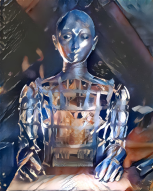
So, this raises the question of whether or not the things we see everyday and encounter often are as we perceive them, since we are not always conscious. Descartes writes that we can, with this question, doubt the more complex, questionable, and unknown phenomena we see in our world. This inherently makes sense- we can easily come to doubt the unknown. For example, I could say that there is another galaxy where unicorns exist. Although we do not know for certain whether the statement would be true or incorrect, we almost automatically question it because of the unknown nature of space. The doubt and questioning that comes into our minds may be subconscious, but it is due to past knowledge and experiences we have consciously absorbed. We see this in Westworld when Dolores starts getting flashbacks- there are times where she is not consciously attempting to dig up her memories, yet they pop into her head when there is an event that triggers them. She may not have purposefully made those moments into a memory when they happened, but it shows that she was conscious in those moments, enough so to remember them. This is where we saw that the hosts were gaining consciousness and starting to question the world around them.
We see Descartes continue to question the world around him, moving to concern himself with simple matters that we often think to be unarguable, such as arithmetic and geometry. He assures himself of their validity by reasoning, “…whether I am awake or asleep, two and three added together are five”(Descartes 14). Descartes makes a valid point in the sense that what we know to be fact will hold true, consciously and unconsciously. But, where did these facts come from, and how do we know things like languages and mathematics are correct?
Descartes, along the same line, then writes about the way a God could easily change the meanings of simple things we think of as fact. At first, I thought this was a far-fetched idea. But, thinking about Westworld, the humans are technically the gods of the hosts, and are gods that can very easily change the meaning of their world and their story. It is easy to watch the show and be unbothered by this, without relating it to our own lives. But when we think of our God, it can easily be questioned, how and why would God deceive us? It could be to protect us from going mad, or maybe to shield us from our own consciousness. Maybe Descartes discovered that, should God allow us to be undeceived, then our consciousness of reality would be too much to bear. I think of this in the same way a mother would shield her child from news of war and violence. A child simply cannot bear the burden of these things. Maybe, as God’s children, we cannot bear the weight of reality in a conscious state.
But then, Descartes raises another concern- what if there is no God? He argues that then, there would be an even larger chance that we are being deceived. So, we can consider the idea that rather than God being an illusion, it may be our consciousness that is an illusion. However, as someone who does not hold a strong religious background, I have chosen to focus on how we affect our own consciousness rather than how God may influence it. Westworld and Descartes seem to create arguments that our consciousness and its different states are true and important parts of our personhood, however as something intangible and unknown, like astronomy, we come to question it. With this argument, however, we will assume that our consciousness itself is not an illusion and move to question the illusory nature of senses and perception.
Moving to focus solely on the idea of different states of being and how consciousness plays into them, we can turn back to the discussion of the state of sleep. How do we distinguish sleeping from being awake? When we are asleep, we still see objects, feel emotions, and hear sounds as we dream. We still use our senses to perceive objects and the world around us. I recently had a dream where my Mcard was missing, as I saw that it was not in the back of my phone case. However, when I woke up I quickly checked my phone case and, sure enough, it was still there. Both the dream and reality felt perfectly real- so, what was the difference? We find ourselves questioning this often, of how a dream was so vivid or felt “real”. This is where we see Descartes’s argument about the unreliability of consciousness play in- we cannot definitively distinguish between the two states. From this situation arises the concept of constancy- the idea that there are different types of awareness that we as humans experience and use as frames of reference to work towards and create continuity of identity over time. Descartes suggests that dreaming is not conscious at all in stating “…it must surely be admitted that the visions which come in sleep are like paintings…”(Descartes 13). But, as an extension of this idea of constancy, being asleep and having dreams is merely a different form of consciousness than being ‘awake’. Yet, how do we differentiate between these different states, if both are forms of awareness?
In comparing the states of sleep and wakefulness, one can draw on the similarities between dreams and memories across the two states. Dreams are our perceived reality that often draw on past experiences or future hopes. Memories, on the other hand, are our remembrances of the past that we draw on to relate to our present, apply lessons learned, and form our character. So, these two have similar effects on us when we are in each state, and even play into each other at times- sometimes we dream about memories, and often we remember our dreams.
Yet, something else we can conclude about both dreams and memories is that we can forget them. With these similarities between the states and their association as variations of consciousness, we can turn to focus on memories as a facet for how our consciousness is formed over time.
Looking at our personal memories that stick out to us and examining how those have shaped who we are, we can begin to understand the various ways they can shape our consciousness. One of my key memories that has stuck with me is as follows: when I was 7 years old, I attended a party at our local indoor pool. I wasn’t a bad swimmer, nor was I absolutely amazing. But, I was perfectly content bopping around with my friends. Eventually, I decided to take a break and get out of the pool. Too lazy to swim to the ladder, I decided to get out on the side of the pool where I already was. So I hoisted myself up, about to twist and place my bottom on the ledge, when my hands slipped and I hit my chin on the ledge. At first, I almost didn’t think anything of it. So, I exited the pool and went and told my mom what happened as I stood there dripping wet. We realized then that I had sliced my chin open, and I went to get first aid from the lifeguards. I probably should have gotten stitches, but I never did. Because of this, I still have a half-inch scar under my chin that I’m reminded of from time to time. But from this incident came not only the scar, but a new habit of mine. Ever since hitting my chin, I now get up onto the pool ledge backwards so I don’t have the possibility of hitting my chin- only my backside. I think this habit has arisen through originally a little bit of fear, and over time through the repetition of doing this motion. Now, I don’t even think about this habit- time to time I chuckle about the reasoning behind it- but beyond this memory, it has just become part of who I am and how I approach the world. Looking at memories like this and examining how they have shaped our identity over time can help us understand how constancy and differing states of awareness affect our consciousness and identity over time. Do memories prove that we are conscious beings? Do they shape our awareness of the world around us? How would we be different without memories?
When first moving through Descartes’s meditations, I came to the conclusion that memories prove our consciousness through the awareness necessary in order to create memories and then recall them. Intuitively, this makes sense- we must have been in a state of awareness in order to form a memory. However, despite memories helping shape our consciousness and character, memory is thought to be an aspect of our brain that we do not consciously manage and have little control over (Hoffmann 2/10/22). Memories can even trick us, if remembered incorrectly or as they seemingly fade over time. So, rather than memories themselves proving consciousness, we can turn to question how memories shape our consciousness rather than prove it.
Going back to Descartes and diving into his second meditation, I noticed his discussion of our senses on a deeper level than I previously had. He writes, “I will suppose then, that everything I see is spurious. I will believe that my memories tell me lies, and that none of the things that it reports ever happened. I have no senses”(Descartes 16). He conveys the idea that although we know we exist, we cannot trust our memory or senses due to the possibility of deceit or being in a different state of consciousness. So, this is why we can once again see that the senses we have in our past remembrances could be false and therefore cannot constitute our consciousness. However, these experiences that turn into memories can shape our awareness of the world around us. For example, a memory that teaches us a lesson- say running on a pool deck and falling, as similar to my memory of splitting my chin, creates a new sense of awareness where we are more careful and aware of our surroundings. These layers of consciousness created from memories then shape our perception of the world and how we act within it.
Relating this idea to Westworld, we saw Dolores begin to gain consciousness as she had more flashbacks. These memories gave her new insights to the world around her and began to shape how she thought and acted. We saw her become more aware of who she was and how she acted- a sign that these flashbacks were providing her with lessons and knowledge that helped shape and grow her consciousness. When asked where she was in her conversations with Bernard, Dolores repeatedly responded “I am in a dream” (Westworld, Season 1 Episode 1). At first glance, this seemed silly- I even questioned if this was a response prompted in her code. But after examining the concepts of dreams and constancy, we can conclude that this is not as far-fetched as it seems. Her response easily could have been as a result of a lack of consciousness before she started having those flashbacks. So, we can see how memories are a key element to consciousness and being able to distinguish between various states of it.
These various states of consciousness provide us with different frameworks and lenses of our world. Although some, such as dreaming, may “deceive” us in comparison to the state of wakefulness, they serve a purpose in shaping our view and awareness of the world. Both Descartes and Westworld affirm this idea and the constancy we can create through it through the thought experiments of dreams and memories that display the different states of being that we experience as humans (or hosts). These states of consciousness shape our opinions and viewpoints on the world, which mold us to a certain consciousness that is unique to us.
Across sleep and wakefulness, we see how dreams and memories form and shape our consciousness over time through continuity of identity. These differing states then act as frames of reference in terms of awareness of what state of consciousness we are in, and how we interact with the things and people around us. Without them, our consciousness would remain surface level and we would be similar to that of a host. So, we see how the way these memories help us achieve constancy is crucial to consciousness and how we layer our awareness and who we are as people over time.
Although I am not the same person I was at 16, I still hold memories that have shaped me into the person I am today, someone that has a deeper consciousness and awareness of the world around me than I once did. One of the key experiences that has shaped who I am and how I view the world has been tennis. Over the summer from sophomore to junior year, I spent about 6 hours on the tennis court daily. This was clearly a lot of repetition within my days and within my weeks. At least five days a week, my routine was wake up, eat a protein bar, fill my water jug, drive to 8am practice, hit, take a water break, talk about strategy, and repeat until 10am. Then, I drove home, showered , ate lunch and whatever else I had to do that day until it was time to eat a snack and go to another practice from 4-8pm where I had the same structure as the morning practice. I definitely was not used to working so hard for so long daily, but by the end of the summer I was able to see a lot of growth and improvement in multiple ways. First, I was predictably more physically in-shape and better at the sport itself.
But beyond this, and more importantly to me, I had a new mindset. I came to understand that hard work truly does pay off and allow you to achieve your goals. I was playing better, hitting more accurately, and winning tougher matches. Seeing the results of the long, hot hours come to fruition in front of me was one of the most pivotal moments during highschool for me. I was also mentally tougher- whether it be hard conditioning or the mental game within tennis, I now had a stronger mindset where I was able to better control my thoughts and emotions in a way that allowed me to better succeed on, and off, the court.
This mental strength increased my freedom as a person to be able to have a stronger hold on my thought process and how I allowed outside factors to affect me. Without the repetition of practice each day that summer, I would not have formed muscle memory, learned new strategies, been taught new lessons, and grown mentally tougher- which has all carried over from my high school tennis days to who I am today. Daily, I see the discipline and work ethic that was instilled in me projected onto my drive within my schoolwork and other activities, allowing me to better achieve my goals and the success I strive for. Remembrances like the ones I have of my time playing tennis reaffirm this idea that memories create lessons for us that stay with our identity through the idea of constancy, coming to shape who we are as people. Looking further into this, we can examine what it is about these memories that sticks with us, allowing us to recall them and be affected by them.
In examining both Descartes’s Meditations and The Body in Pain: The Making and Unmaking of the World by Elaine Scarry, we can relate the two works through the quality of phenomenality as it relates to consciousness. Different states of awareness, such as sleep and wakefulness, possess this quality of experiencing senses, such as seeing color and hearing noise, that allow us to ‘feel like ourselves’. So, how do the results of these states- dreams and memories- affect our consciousness? As previously mentioned, due to the notion of forgetfulness and its neurological (rather than conscious) nature, we cannot say that these past recollections alone constitute consciousness. So, we can turn to examine the ways in which both authors explore this idea of how the phenomenality of these experiences shapes our consciousness.
In his meditations, we see Descartes discuss the notion that we cannot distinguish between different states of consciousness, namely sleep and wakefulness. He explores this idea of phenomenality through discussing dreams and how they feel perfectly real. He writes, “…there are never any sure signs by means of which being awake can be distinguished from being asleep”(Descartes 13). This concept can also be applied to memories, as with both we experience senses that create an experience of feeling ‘real’. Through this feeling of being us, our consciousness is shaped as we experience various senses that we remember and then create opinions and viewpoints with. This idea of dreams and memories shaping our consciousness is crucial- it may be easy to conclude that they constitute it. However, because of the little control we consciously have over our memories and dreams, we cannot trust our senses and so these memories alone cannot be the crux of our consciousness. So, in opposition to Descartes, we can therefore argue that despite us knowing we exist and knowing that we have senses, this possibility of deceit does not deny the existence of these senses and experiences we have and their effect on our consciousness.
This resembles Scarry’s focus on “what it feels like to be me”, and this concept of how phenomenality layers our consciousness. In her discussion of this feeling, Scarry comes to the conclusion that, similarly to Descartes, consciousness is more than knowledge and perception and rather it is the experience of sensations that allows us to learn and grow. As stated by Professor George Hoffmann, Scarry writes about this idea that “Knowledge of something is not the same as the experience of it”(Hoffmann 2/8/22). Because we cannot reduce these experiences of sensations to neural activity, we can conclude that rather these experiences allow us to form dreams, memories, opinions, and qualities that shape our view and awareness of our world. So, we see how these two authors have viewpoints that interact in such a way that relates the experiences that come with sense to the phenomenal aspect of consciousness. Through their discussions of how senses are a crucial part of experiences such as memories and dreams, we can come to the conclusion that the phenomenality of these experiences is what makes them meaningful to who we are as people as they shape our consciousness.
In an attempt to relate these ideas of phenomenality to my own experiences, we can look back to my memory of hitting my chin on the pool that I previously discussed. I can remember the vision and emotions of the setting clearly. It was still winter time- in Chicago this meant it was bitter cold, windy, and snowing- so the indoor aspect was necessary for a successful party. I was having a blast- swimming, singing, eating cake- all the fun things kids get to do at a birthday party. Further, I still remember how I was feeling during this party, and how my 5 senses were engaged throughout. The smell of the chlorine in the pool was overpowering, but in the comforting way that got you excited to jump in and wade around. Then, after having some delicious, sweet, and rich vanilla funfetti cake, we got back into the pool, without waiting that pesky thirty minutes. We could still even taste the birthday cake in our mouths as we swam around playing pool games like marco polo and red light green light. The senses and emotions surrounding this memory is what has allowed it to become and stay meaningful to me and my consciousness over time. Without the phenomenality of the experience, it would not have affected my consciousness in such a large way.
However, turning back to the arguments of Decartes and Scarry as they relate to this situation, as well as other memories, there are also differences between these authors. Descartes discusses that we cannot trust our senses, due to the possibility of deceit from an evil demon or other factors. He concludes this by saying, “I will suppose then, that everything I see is spurious. I will believe that my memories tell me lies, and that none of the things that it reports ever happened. I have no senses”(Descartes 16). He herein implies that the senses he experiences are illusory and so are his past remembrances. Scarry, on the other hand, believes that we can trust our senses despite any possibility of deceit because these sensations are about the feeling rather than the physicality. This is seen when she writes, ““Aliveness” or “awareness of aliveness,” it will be argued, is in some very qualified sense projected out onto the object world”(Scarry 286). In stating this, Scarry projects the idea that regardless of deceit, our senses create this feeling of being alive.
Further, both Scarry and Descartes discuss the role that past recollections play in our consciousness. However, they use different states when discussing this idea and have slightly differing opinions on the roles they play. On one hand, Scarry uses the example of memories to discuss the parallel between them and machines, writing about the embodiment of recollections within machines and systems we have created. She writes, “The printing press, the institutionalized convention of written history, photographs, libraries, films, tape recordings, and Xerox machines are all materializations of the elusive embodied capacity for memory…” (Scarry 283), and goes on to convey the idea that we project our memories onto objects as they teach us lessons and ideas that relate these items.
Conversely, Descartes uses the recollection of dreams in an attempt to explore the difference in sensations experienced across sleep and wakefulness, writing “How often, asleep at night, am I convinced of just such familiar events- that I am in my dressing gown, sitting by the fire…”(Descartes 13). Descartes conveys here that his senses within both dreams and wakefulness are the same and provide him with the same experiences. Scarry hereby discusses memories differently than Descartes in her writing, however we still see how Scarry’s ideas about experiencing senses relate to Descartes’s questions about dreams. As this relates to the phenomenal aspects of dreams and memories shaping consciousness, Scarry and Descartes both acknowledge that these past recollections are crucial in the development of consciousness through the experiences of ‘feeling like yourself’ that they provide.
Despite these differences in the author’s viewpoints, both still reaffirm the claim that different states of being are related through phenomenality, and these states mold our consciousness and perception of the world around us through the experience of senses. These ideas of dreams, memories, and sensations are all connected with a possibility of deceit. However, even with the risk of deceit we see how, regardless, the experience of feeling and sensing, beyond a physical sense, provides new perspectives that shape our consciousness uniquely to us.
In examining these authors, I have claimed that our consciousness can be shaped through not only physical sensations, but rather also by Scarry’s notion of experiencing these senses. One could easily object that the physical part of my claim does not relate to consciousness, and the validity of my argument is tested due to the possibility of deceit that Descartes grapples with. However, looking closer at the nature of this idea, one can draw on the fact that deceit does not remove the value of the experience that comes with that sense, even if what we are sensing is an illusion. Relating this to the Allegory of the Cave, the prisoners had no choice in their deceit of not knowing the outside world. Despite their senses arguably being deceived by the shadows, it did not take away the experiences of seeing them and the ways in which it shaped the prisoner’s views of the world. This is where we can connect these past recollections and different states of being to consciousness as the phenomenality of experiencing them, despite possible deceit, allows our consciousness to become layered across various sensations and experiences. The senses we experience and the phenomenality that comes with them build memories and dreams that teach us lessons and give us viewpoints that therefore shape our consciousness.
As Descartes discusses dreams in Meditations and writes that “there are never any sure signs by means of which being awake can be distinguished from being asleep”, he implies that phenomenality exists across differing states of consciousness through this concept of experiencing the same senses in sleep as wakefulness. Understanding this idea of phenomenality and what Scarry describes as “what it feels like to be me” is important in Descartes’ writing as he questions the validity of our senses due to possible deceit. However, one can conclude from this idea that regardless of deception, our senses still exist, and this quality of phenomenality we experience therefore relates different states of consciousness. In effect, Descartes’s argument as it relates to phenomenality can seemingly move us to think beyond the idea of the subconscious brain controlling consciousness that is commonly concluded and discussed by many, including philosophers.
Rather, Descartes’s discussion of senses as we can relate it to phenomenality posits the notion of how consciousness (the mind) can affect the brain through memories that are attached to senses and emotions. Without these aspects of memories, they would not teach us the lessons they do nor would they shape our consciousness in the same way- they would almost be like watching scenes in a movie and would not affect our emotions or behaviors. Because of the way these conscious experiences are tied to memories, and the sense in which memories are tied to neurological activity, we can conceivably conclude that the mind can in fact influence the brain. Rather than the brain imposing continuity of self, we can see that memories shape our identity, which is then imposed on the brain as we decide to make certain decisions or act in certain ways that correspond with our identity our consciousness has created. Through allowing us to go back and relate to ourselves overtime, memories allow us to build constancy as a facet of our consciousness. And although it can be argued that memories may change or deteriorate over time, the emotions and senses attached to them are what leaves an impact on our identity and awareness of the world around us. Memories therefore allow us to build our consciousness over time and without them, we would not know who we are beyond that singular moment, deducing us to be more like the hosts of Westworld than the humans we are today.
 Team Felix